
The NFL's nightmare
Black coaches' racial discrimination claims against the NFL can proceed to open court instead of secret arbitration after the league fumbled its appeal.

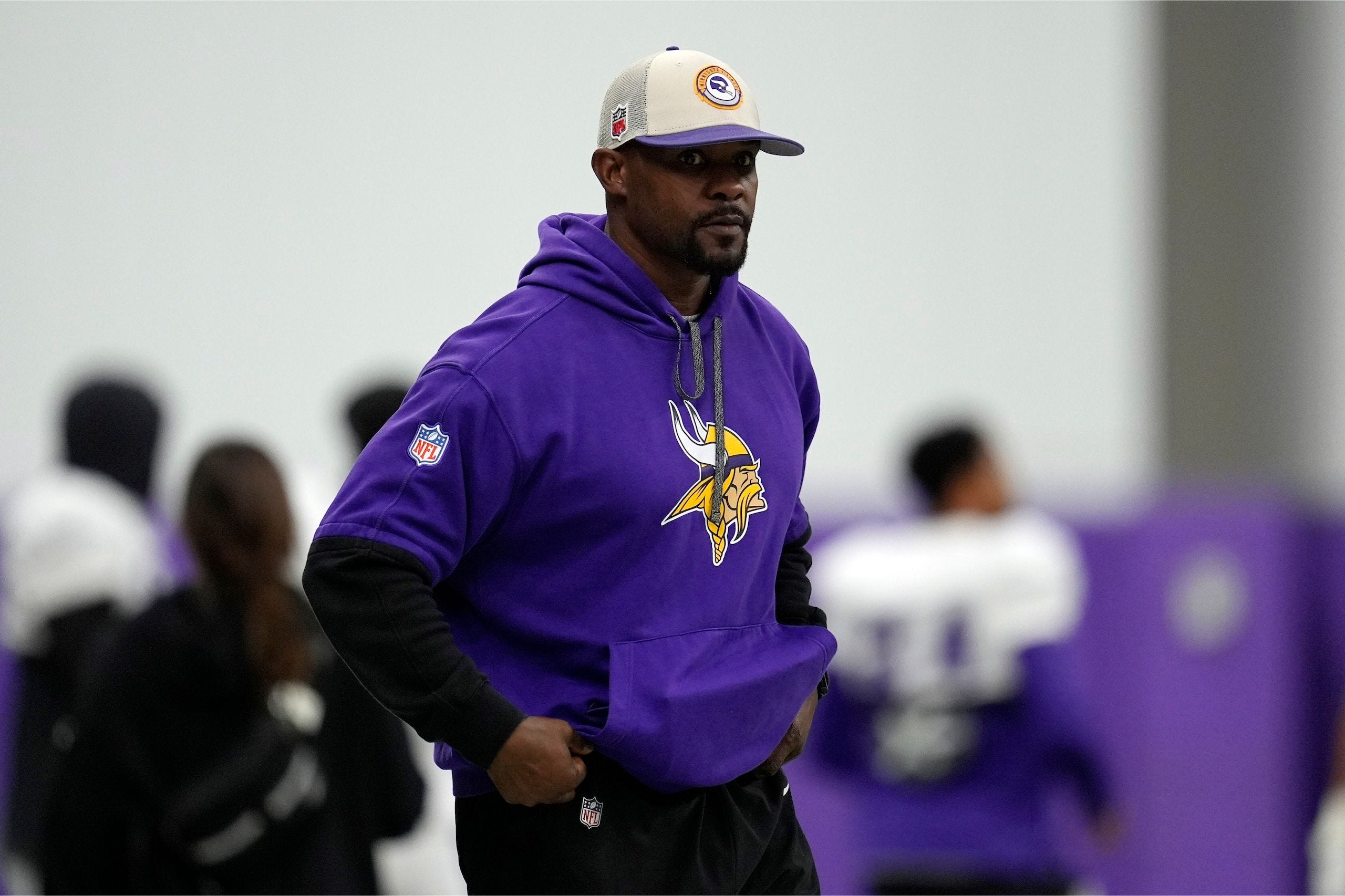
In a desperate attempt to dodge a racial discrimination lawsuit, the NFL ended up more exposed than ever.
Four years after former Miami Dolphins head coach Brian Flores accused the league of being “rife with racism” and orchestrating sham interviews to comply with diversity recruiting requirements, his claims finally are cleared for takeoff. And in a twist of fate, his class action now has more momentum thanks to the NFL’s pushback.
In March 2023, a federal judge said Flores could take the New York Giants, Denver Broncos and Houston Texans to court over their hiring practices because he wasn’t under contract involving an arbitration clause with those teams. However, she sided with the NFL on arbitrating Flores’ claims against the Miami Dolphins, Steve Wilks’ claims against the Arizona Cardinals and Ray Horton’s claims against the Tennessee Titans, effectively keeping those disputes private.
Hungry for an ironclad shield from civil liability, the NFL appealed — and it backfired miserably. The Second Circuit deemed the league’s arbitration process unfair due to Commissioner Roger Goodell’s involvement in August 2025, leading the lower court judge earlier this month to send all of the coaches’ discrimination claims to open court instead of secret arbitration [Erik Uebelacker].
“An arbitration agreement where the person in charge of the organization you’re suing is the ultimate adjudicator — that’s just fundamentally an unfair process,” said Arizona State law professor David Lopez, who served as general counsel of the U.S. Equal Employment Opportunity Commission under President Barack Obama.
Flores’ Dolphins case switching from arbitration to federal court figures to be particularly troubling for the NFL. Dolphins owner Stephen Ross is accused of offering Flores $100,000 per loss in pursuit of the top draft pick in 2020 and orchestrating a yacht meeting with a rival quarterback — Tom Brady, reportedly — while he was under contract with another team. Flores, who led the Dolphins to consecutive winning seasons before being ousted in 2022, says he was fired for refusing to tank or tamper.
Discovery would be potentially disastrous for the league, but educational for the public.
“We want to know how discrimination cases are adjudicated,” said Lopez, who founded ASU Law’s Civil Rights, Migration and Workplace Law Initiative. “It really guides companies in terms of understanding their responsibilities and workers in terms of understanding their rights.
“One wonders how many of these learning opportunities are out there bottled up in private arbitration,” he added. “Certainly the NFL is a very high-profile employer and this is a very high-profile issue, which is probably why they wanted to do an arbitration, but I think many would argue that’s the reason it should not be in arbitration — that we need to understand how the NFL functions. And for an African-American who wants to apply for a coaching position or other sports leagues, I think it’s important to understand the facts of the case and what lessons can be gleaned from the case.”
Of course, the NFL’s not done fighting — last month, it petitioned the Supreme Court to review the Second Circuit’s arbitration ruling. And if the league can’t complete a Hail Mary to the high court, it could try to avoid public scrutiny via settlement.
But this isn’t the Flores of four years ago, freshly fired from the Dolphins with his coaching career hanging in the balance. Over the past three seasons in Minnesota, his work with the Vikings’ defense has turned him into one of the highest-paid assistant coaches in football. Perhaps he’s prepared to take this legal battle all the way to trial just to prove a point.
See what else fell under the lights this month:
Quick hits ⚡
Not-so-free samples
The family of a funk songwriter settled a dispute over unpaid royalties from the 1973 single “Impeach the President,” which features an iconic drum break that has been sampled hundreds of times by Tupac, Biggie, Nas, J. Cole and more. [Josh Russell]
Fix for tix
The Justice Department’s bid to break up Ticketmaster and Live Nation’s monopoly across the concert industry will head to trial next month in Manhattan federal court, overseen by the same judge who heard last year’s “Diddy” case. [Josh Russell]
Cleavage caution
An LA Superior Court judge warned there would be no “revealing clothing” or “drama” allowed ahead of Kanye West’s upcoming civil trial over unpaid wages to a former contractor, where his wife Bianca Censori is also expected to testify. [Hillel Aron]
Locker room talk 🎤
“It’s déjà vu all over again,” a federal judge said to begin a hearing on salmon protections in the Columbia Basin — the first of three Yogi Berra quotes referenced in court that day — before ending with a bang from the legendary New York Yankees catcher: “If you don’t know where you’re going, when you get there you will be lost.” [Monique Merrill]
Leaderboard 🏆
California imposes sweeping changes to blackjack in cardrooms 🥇 [Alan Riquelmy]
10 Things I Hate About Section 230: Joseph Gordon-Levitt urges rollback of Big Tech protections 🥈 [Benjamin S. Weiss]
FBI charges man with making phony ransom demand in Guthrie kidnapping case 🥉 [Joe Duhownik]
From the vault 🔒
With the Winter Olympics in the rearview and the Paralympics around the corner, we’re winding the clock back to when a group of wheelchair racing Paralympians sued the U.S. Olympic Committee seeking the same benefits as their Olympic counterparts.
A 10th Circuit panel sided against the disabled athletes in 2008, but one judge wrote a fiery dissent insisting the funding disparity is discriminatory.
“What the statute forbids is exactly what has occurred and is occurring here,” wrote the late U.S. Circuit Judge William Holloway, a Lyndon Johnson appointee. “This defiance of plain legislative intent is crystal-clear from the congressional statement that the Paralympics are ‘the Olympics for disabled amateur athletes.’”
More from Courthouse News:
Our weekly newsletter, Closing Arguments
Our podcast, Sidebar
And, of course, our news site